
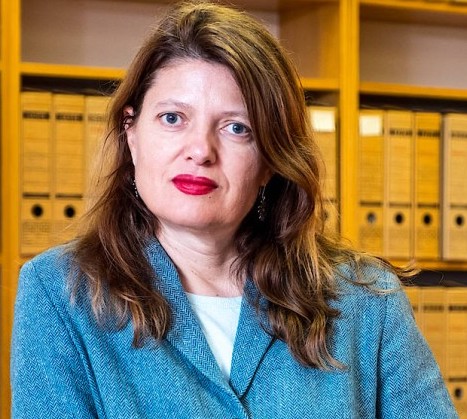
How do we kill a language?Kenneth Diole recently wrote in the Daily Maverick that “violence is South Africa’s unofficial 13th language”—a fresh framing that caught my attention beyond the sincere but obvious condemnations of the violence vying for space across our headlines.Certainly, the metaphor rings true.Violence in South Africa cuts across race, language, class and context. It breeds a culture of contempt, impunity and hopelessness. It teaches its vocabulary to the youngest children in homes, streets and schools, recruiting more people to its ranks by using this language against them and then provoking responses in the same tongue.It has become commonplace, almost unremarkable. It is easy to feel helpless in the face of this scourge when everyone appears overwhelmed—the police, the courts, the victims and society itself.Brent Lindeque asks what we obscure when we speak only about the nine women murdered in Kempton Park, as if this tragedy were an anomaly. With 58–60 people murdered in South Africa every day, he points out that among us there are also potentially equal numbers of people daily who kill—people who might be described as being highly fluent in Diole’s “language”.If violence is South Africa’s 13th language, then how do we go about “killing” this language?In South Africa we have, shamefully, been extremely effective at killing languages. Several indigenous languages have already disappeared, while others remain endangered. This linguicide has been achieved through genocide, active oppression, systemic neglect and the social shaming of those who speak them.Could we turn those same mechanisms, not against people or cultures, but rather against violence itself?We could call out those who use violence as an everyday response, refusing to treat violent words and actions as normal, admirable or inevitable. We could make violence socially shameful rather than allowing its perpetrators status, silence or protection. We could disempower the structures that give this language validity: inequality, misogyny, corruption, ineffective policing and justice systems, and importantly the everyday acceptance of domination as strength.But killing a language also requires offering other languages in its place.The arts can and do provide these alternative languages. Through theatre, dance, music, storytelling and visual art, children and young people can name experiences for which they may have no words. They can rehearse empathy and explore differences. They can express anger without inflicting harm and imagine responses other than retaliation. They can find spaces of healing and belonging in place of isolation and fear.The arts teach the languages of curiosity, complexity, courage and care – languages that require deep listening alongside slow and thoughtful engagement.A language dies when it is no longer taught, rewarded or useful; when its institutions fall away and its speakers choose another tongue.Perhaps this is how we begin to kill the language of violence: by refusing to speak it, by removing the power that sustains it, and by ensuring that every child becomes fluent in something else. We call on all ASSITEJ SA members and member organisations, and indeed, all artists, to consider how they may join us in these efforts to shift the unofficial 13th language of South Africa from the language of violence to the language(s) of the arts.– Yvette Hardie, Director, ASSITEJ South Africa
Sign-Up Here
Join Us
Enjoy ASSITEJ South Africa benefits.
Be in the Know
Get relevant info direct by e-mail.
Our Dedicated Partners
Thank you to all our partners, supporters, funders and friends.


