

-
“Nna ke batla ho bona serurubele …
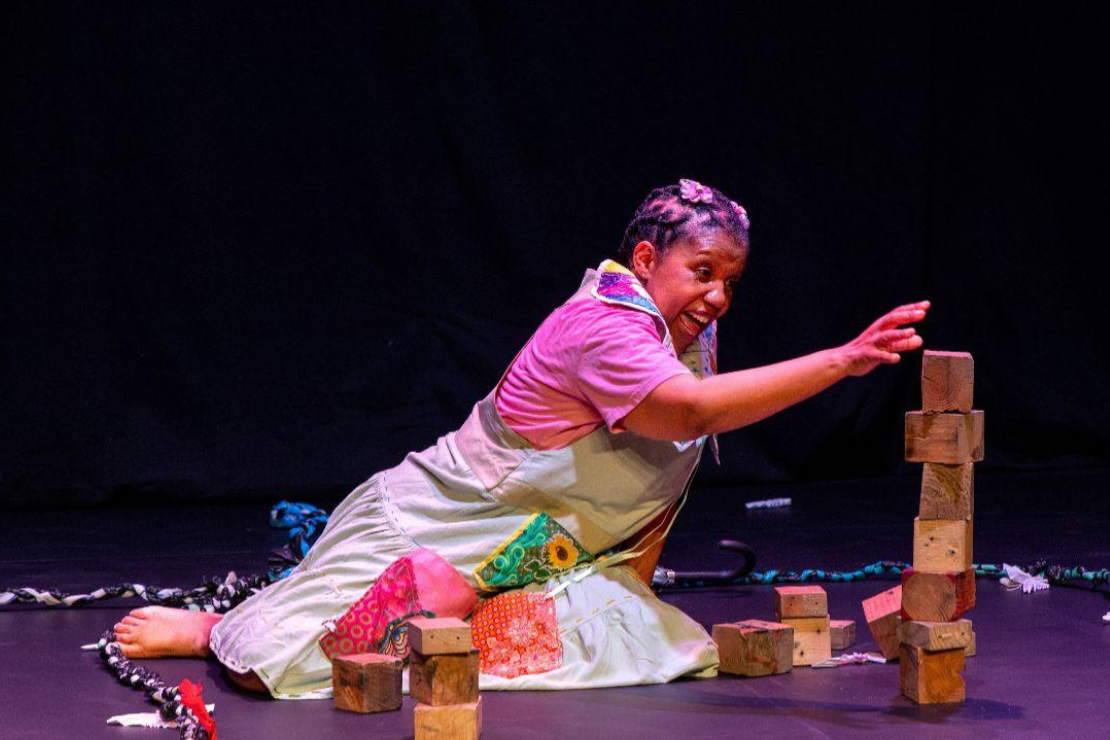
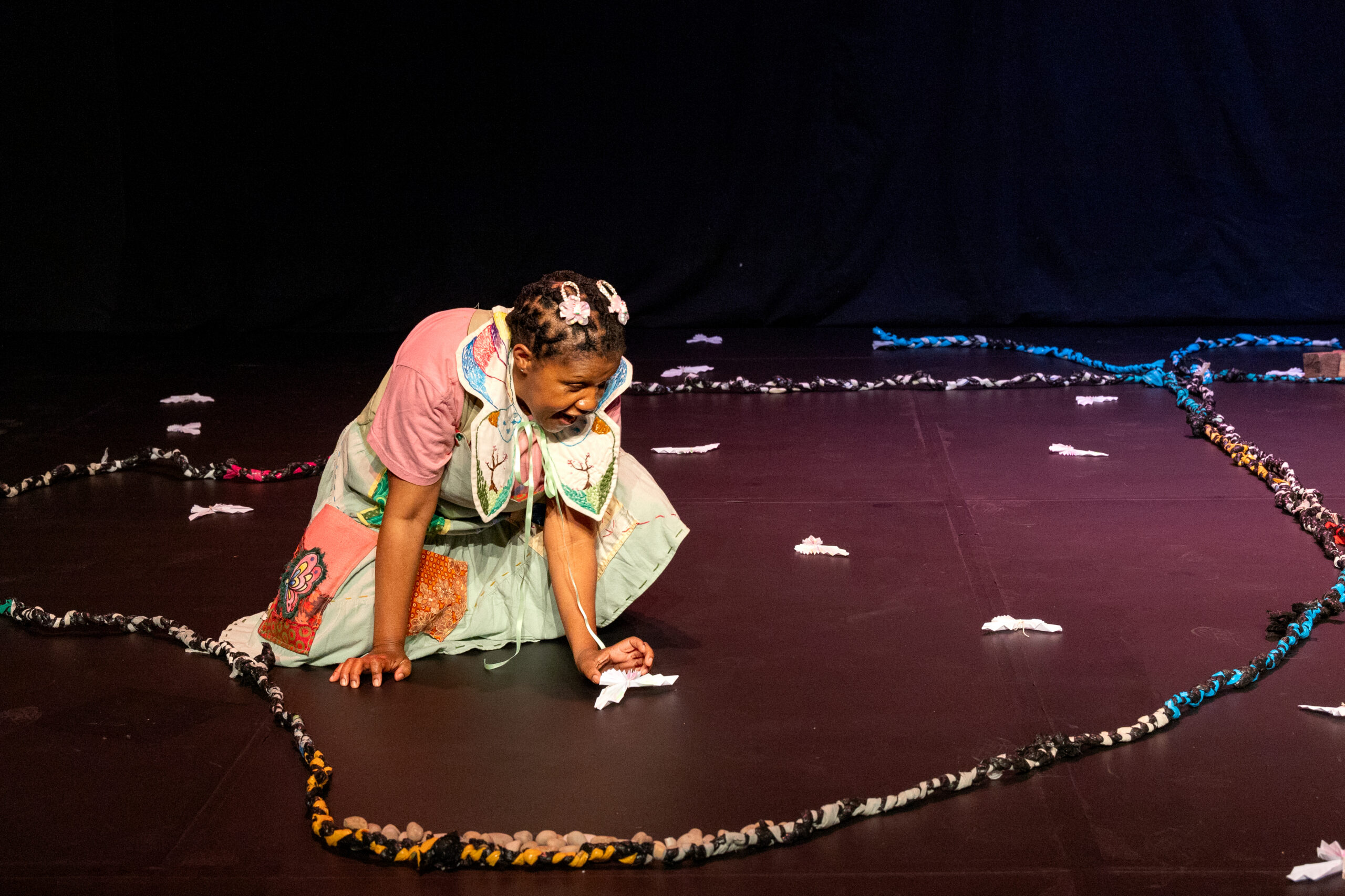
Nna ke batla ho bona serurubele is a childhood chant. It translates to “I want to see a butterfly. It has visited me since I attended the 2026 ASSITEJ SA Cradle of Creativity Festival and Professional Development in Johannesburg. Serurubele is an insect that stays for a moment, but is remembered for a long time. Depth vs duration is at play here: The festival and professional development will stay with me as one of my most memorable experiences. I performed Serurubele, adapted from my book Butterfly Heart (illustrated by Rebecca Potterton, translated into nine languages and published by Jacana Media). The play opens a conversation about death and loss for children aged five to nine. Surrounded by productions from across Africa and Europe, I immersed myself in the power of theatre and performing arts to awaken, agitate, and ignite essential discussions.
I took standing ovations. One time, I met a nearly three-year-old from Zimbabwe shouting my character’s name from her mother’s back: “Mosa, Mosa…” Mathapelo Bodibe, an audience member, told me the show “sits with you like grief itself… love doesn’t end when someone passes, it just changes shape, like a butterfly.” Jerry Adesewo, from ASSITEJ Nigeria, called it grief that “beat softly beneath the wings, teaching children the language of goodbye”. A child audience member, Nkululeko Njoko said, “I give it ten out of ten.”
That is the courage the play asked of everyone in the room – artists and audiences alike – the courage to sit with a five-year-old’s questions about death and not look away. I argue that it takes a particular kind of bravery to hand children the language for goodbye before they’ve needed it, trusting that naming grief early is a kindness, not a burden.
That courage found its match in friendship. Friends insisted on drinks to celebrate. We had belly laughter – talk about people, places and the arts. Somehow, in that ease, we landed on something heavier: our passivity toward social ills, and how we feed them without meaning to. Someone said “like maselamose” – this loosely translates to magic, or illusion. It named the illusory hold organised crime has over us, the grip of hand that lets a society look at harm and convince itself it isn’t really seeing it.
I didn’t know how soon the word would stop being theoretical.
Before intellect catches up, the body responds, fight, flight, freeze, or fawn: confrontation, escape, numb stillness, or appeasement. I am a fight person. When someone pounced on me and snatched my phone, violently, before it was sped away in a car, I fought – grateful, in hindsight, that they didn’t grab me instead. Bystanders watched motionless; my cries for help fell on eyes and ears all too familiar with the scene.
The days that followed brought their own cycle: anger on Friday, fear on Saturday, and determination by Sunday to return to the stage. I am sitting with gratitude for the support I received from the Market Theatre and ASSITEJ SA staff, and from delegates from across Africa, during the ordeal. That kindness – practical, immediate, unasked-for, carried me through in a way I didn’t expect to need. What has stayed with me longer than the fear is the company my loss found itself keeping. Butterfly Heart was always about loss changing shape rather than ending, the loss of a friend Mosa. But following the violation and those who helped me, I felt loss take other shapes too: the loss of safety on a street I thought I knew, the loss bystanders absorb into a shrug because outrage has become exhausting, the losses of home and belonging that xenophobia inflicts on people just trying to build a life somewhere new, the low hum of loss that organised crime leaves in every neighbourhood it moves through; extorted, assaulted, robbed, terrorised into silence. Grief, I was reminded, rarely arrives alone. It sits in a room full of other griefs, some louder than others, some never named at all.
Reflecting on this experience forced me to confront a troubling habit in our public narrative. Society loves stories of redemption. We celebrate former gang members who now mentor youth and ex-dealers who become peace ambassadors. Like a caterpillar that morphs into a butterfly, transformation is real, and we should never close the door on the possibility of change.
However, in our rush to praise redemption, we have quietly stopped asking a crucial question: what happened to the people these individuals hurt along the way?
Organised crime does not operate in the abstract. It moves through neighbourhoods, families, and individual lives, leaving behind traumatised or aggrieved people. When we celebrate a perpetrator’s journey without equal attention to those they harmed, we send a destructive message: that the arc of the offender matters more than the wound of the survivor. A victim watching their abuser praised for growth while their own trauma remains unacknowledged does not experience healing; they experience erasure.
This is not an argument against redemption. It is an invitation, offered in the spirit of what Loretta Ross calls “calling in” and “calling on” rather than “calling out.” Calling out is easy and can isolate and shame; it assumes the worst and closes conversations. Calling in assumes we are all capable of growth, but it also insists we look honestly at what our silences cost. Calling on, in turn, enables others to make a choice.
There’s a second danger: numbness. Cell phone theft has become a rite of passage – “it happens.” Street assaults get a knowing sigh instead of outrage. Downgrade harm to “just how things are,” and we tell victims their pain isn’t worth disrupting our routines, and perpetrators that harm is cheap. This is the freeze response, scaled to a whole society, not involuntary, but chosen: looking away because it’s easier.
Calling this “in” or “on” means compassion for people caught in cycles of crime and poverty, many victimised first themselves, alongside clarity that a stolen phone is violated safety and an assault is dignity disregarded, neither deserving a shrug. It means asking who was harmed before we amplify a comeback story, whether they’ve been supported as the perpetrator has, and when we agreed theft or assault was “normal.” Communities heal not by erasing the past, but by holding the full picture, harmed and transformed, without ranking whose story deserves more light.
To break free from collective passivity, accountability must work both ways. We must call on society to confront its enabling silence, and call on reformed individuals to face the impact of their past actions. True transformation cannot be complete without justice, acknowledgement, and sustained support for survivors.
I am sitting with grief for a society that seems to live in maselamose, grateful, at least, that none of our delegates or artists were violated the way I was. And I am sitting, too, with everything the festival gave me before that: a room full of strangers who became friends over one word, a toddler shouting a name across a crowded theatre, and the particular courage it takes to tell a child that love simply changes shape. That, alongside the loss, is also true. I guess for someone who suffered, loss can mean finally being liberated. So I get it, why the child kept calling after me: Mosa … Mosaaaaa …
– Lalu Mokuku is an artist and Chairperson of ASSITEJ South Africa. Her play Serurubele performed at the Ramolao Makhene Theatre at the Market Square. Her book Butterfly Heart was nominated for Outstanding Children’s Fiction for the 3rd National Arts and Culture Awards
Sign-Up Here
Join Us
Be in the Know
Our Dedicated Partners
Thank you to all our partners, supporters, funders and friends.


