
Why Child Empowerment Is Central to Justice
South Africa is living with a truth that is difficult to face. Between 2018 and 2024, more than 106,000 cases of child rape and 22,000 cases of sexual assault against children were reported to police. Yet fewer than 4 in every 100 child victims will see a conviction. Only 8,6% percent of reported rape cases result in conviction, and fewer than 20% even reach trial. For many children, the justice system is not a place of resolution, but a place where their stories end.
When the vast majority of perpetrators walk free, the damage extends far beyond individual cases. It erodes children’s trust. It teaches children that speaking out may change nothing. It weakens the very institutions meant to protect them.
In November 2025, President Cyril Ramaphosa declared gender based violence and femicide a national disaster. He acknowledged the scale of harm to families, communities and the economy, and the way violence reproduces trauma across generations. This declaration followed sustained civil society pressure, including a petition by Women for Change signed by more than 1.1 million people. It marked an important shift in national recognition.
But recognition alone does not deliver justice. A declaration doesn’t close the gap between violation and accountability. If we are serious about change, we must confront why so many children never see justice in the first place.
One reason is fear.
Monitoring and evaluation findings from ASSITEJ South Africa’s Nompilo project show that when children are asked why it is hard to tell someone about abuse, their answers are consistent. They are afraid. They fear not being believed. They fear being ridiculed. They fear threats. They fear being killed. In a system where convictions are rare, that fear is not irrational. It reflects what children see around them.
Even after watching Nompilo, a production designed to build confidence and knowledge, only 77% of learners said they felt confident they could speak out if someone tried to hurt them. Nearly one in four still hesitated. That hesitation tells us something important. Empowerment cannot be assumed. It must be built deliberately.
For too long, our approach has been reactive. We have assumed that if children report abuse, the system will respond. The evidence shows that this assumption is flawed. Cases are lost through poor investigation, inadequate supervision and high attrition at every stage of the process. Children sense this. When trust is low, reporting feels risky. This creates a cycle. Children do not report because they doubt the outcome. Perpetrators face no consequences. Trust declines further.
Breaking that cycle requires more than legal reform. It requires equipping children before crisis. They need to understand what justice is, how it works, and where they fit within it.
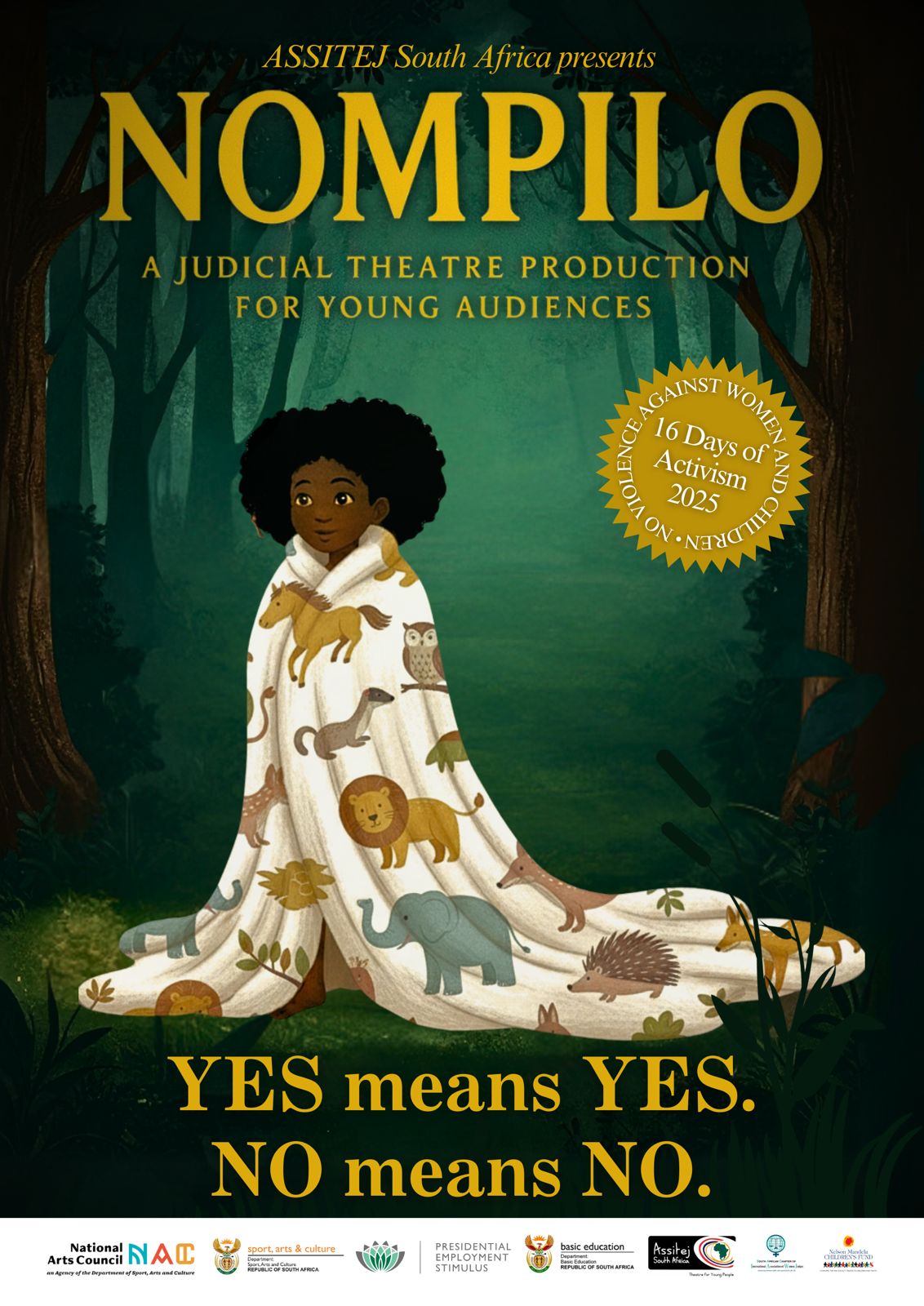
Nompilo uses applied theatre to do precisely this. In its initial phase, it reached more than 5,100 children across 40 schools. Through a child protagonist navigating the aftermath of trauma and the justice process, the production makes the system visible. Police officers, social workers, prosecutors and judges are introduced in ways that are accessible to 11 and 12 year olds. Abstract processes become understandable. Fear becomes something that can be named.
The evidence of impact is clear. More than 85% of learners reported that the play helped them understand where to find information and support related to gender based violence. 97% of teachers said the key messages were communicated clearly, and 91% observed active engagement from learners.
Most importantly, children began to disclose. In several schools, learners approached cast members to share experiences of violence at home. These disclosures were then referred through the appropriate school and social work channels. The production did not solve the justice crisis. But it created a bridge between silence and support.
One Grade 5 learner told the actress playing Nompilo, “You are an inspiration to other people. You helped me to learn that I never have to be rude at other women or people.” This reflects a shift in understanding about respect, boundaries and responsibility.
Child empowerment must include several elements.
First, knowledge of the process. Children need to know what happens after a report is made, who the role players are, and what to expect. Uncertainty breeds fear.
Second, awareness of support. Safe adults, helplines and institutional pathways must be visible and repeated.
Third, trust building. When children see a realistic but hopeful journey through the justice system, it counters the narrative that nothing ever changes.
Fourth, culture change. When whole classes engage together, disclosure becomes less isolating. Peers learn how to respond with support rather than stigma.
Fifth, equipping educators. 80% of teachers involved reported feeling confident to use Nompilo as a teaching resource. Many asked for further training. Sustainable impact depends on adults who can continue the conversation.
The cost of failing to invest in this work is high. Children who remain silent may carry trauma into adulthood. Perpetrators remain free. Communities lose faith in public institutions.
Systemic reform of policing, prosecution and the courts is essential. Better trained investigators, specialist prosecutors and child-friendly courts matter. But these reforms take time. Meanwhile, children are at risk NOW.
Empowerment initiatives offer an immediate, complementary intervention. They operate in schools and communities. They build knowledge before crisis. They increase the likelihood that when harm occurs, children will seek help early, strengthening the chances of accountability.
If gender-based violence is a national disaster, then prevention and empowerment must sit alongside prosecution in the national response. Justice does not begin in the courtroom. It begins when a child understands their rights, recognises abuse, and believes that their voice matters.
We cannot wait for the system to become perfect before investing in children’s agency. Even the most efficient justice system cannot protect a child who does not report, or who believes reporting is pointless.
Empowerment is not an optional extra. It is the foundation on which justice stands. If we want to close the justice gap, we must do it not only through policy and procedure, but through classrooms, conversations and creative interventions that tell every child, clearly and consistently, that they are not alone, that help exists, and that their voice carries power.
Nompilo was commissioned by the South African Council for the International Association of Women Judges (SAC-IAWJ). It has been supported by the Nelson Mandela Children’s Fund’s Girl Power Project, as well as by the NAC PESP funding and the Department of Cultural Affairs and Sports (DCAS), Western Cape. It is currently touring in Eastern Cape, KZN, Limpopo and the central Karoo region of the Western Cape.
TO ENQUIRE ABOUT THE TOUR, REACH OUT TO info@assitej.org.za

Sign-Up Here
Join Us
Be in the Know
Our Dedicated Partners
Thank you to all our partners, supporters, funders and friends.


